Who Are the Top Bucking Unit Manufacturers in China?
Choosing a Bucking Unit manufacturer in China takes more than comparing prices. Buyers should examine torque capacity, connection range, cycle time, and the stability of the control system. These details affect daily work on a rig floor or in a pipe yard. A polished brochure cannot prove how a machine performs under repeated loading.
Check the chuck design, die options, safety interlocks, and availability of replacement parts. Ask for test records, operating references, and clear documentation for the specific model. Small details matter. So does service after delivery. Taiichi Ohno, a respected manufacturing expert, is widely associated with the reminder, “Without standards, there can be no improvement.” Applied here, that principle makes documented inspection and repeatable testing useful points of comparison.
This guide examines leading Chinese suppliers through practical criteria, including product range, customization, manufacturing capability, and customer support. It also considers whether a company builds the complete Bucking Unit or integrates components from other suppliers. That distinction may affect lead times, troubleshooting, and responsibility for performance. Rankings can be imperfect; public information varies, and buyer requirements differ. A unit suited to one pipe connection or worksite may not fit another. The goal is not to treat every claim as proof, but to help readers ask sharper questions before selecting a manufacturer.
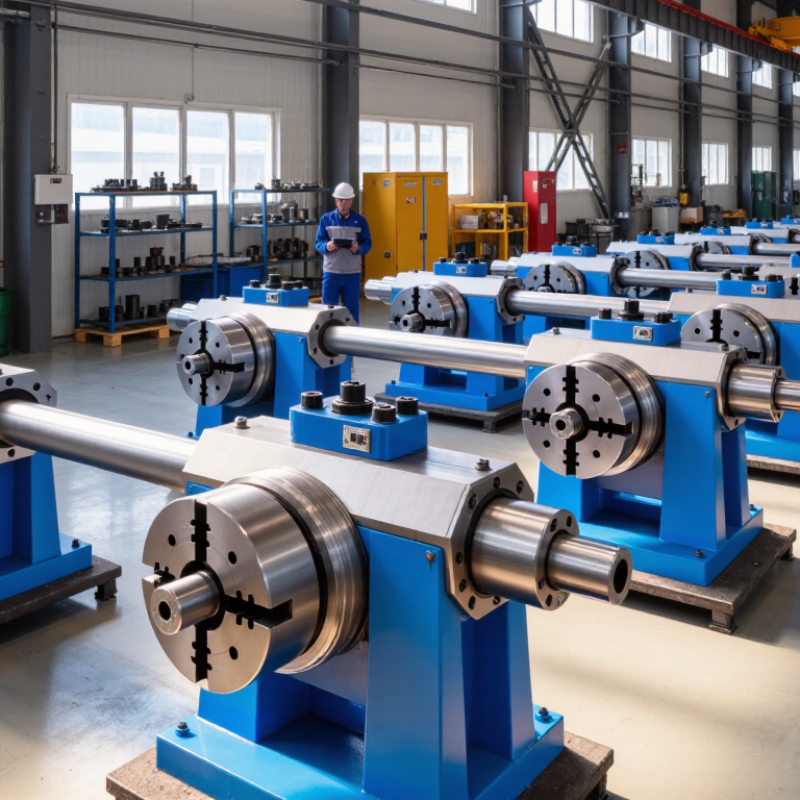
Bucking Units Defined: Make-Up Torque, Clamp Range, and Cycle Time
Who Are the Top Bucking Unit Manufacturers in China?
Bucking Units Defined: Make-Up Torque, Clamp Range, and Cycle Time
When comparing bucking unit manufacturers in China, start with the machine’s operating specifications, not a broad claim of performance. Make-up torque is the rotational force applied to join tubular connections. A unit should deliver the required torque consistently, with controls that let operators set and monitor the target. Too little torque can leave a connection loose. Too much may damage threads or seals. Ask for test records and the conditions under which torque accuracy was measured.
Tips: Confirm the clamp range against the actual pipe diameters you handle. Check whether jaw changes are quick, secure, and practical for your crew.
Cycle time describes how long the unit takes to clamp, rotate, and release a connection. A fast cycle can improve output, but only if clamping remains stable and readings stay reliable. Request a demonstration using comparable pipe and connection sizes. Also ask about calibration, operator training, and access to replacement parts. Specifications are useful, but they do not tell the whole story; real workshop conditions can expose gaps that a brochure misses.
API 5CT’s 4½–20-Inch Casing Range and Bucking-Unit Sizing
API 5CT covers casing sizes from 4½ to 20 inches, but that range alone cannot determine the right bucking unit. A 4½-inch joint and a 20-inch joint differ greatly in handling needs, clamp setup, and connection make-up torque. Unit selection should follow the actual casing sizes and connection specifications used on site.
Check the required torque range against the connection manufacturer’s make-up guidance, not just the pipe diameter. The unit should deliver controlled, repeatable torque across the work program. Confirm that its torque measurement system is suitable, and that dies, inserts, and backup clamps fit the casing without damaging its surface. For mixed sizes, ask whether changeover parts are available and how long a safe changeover takes. Small details matter.
A broad 4½–20-inch range may require several setups rather than one universal configuration. Verify the largest and smallest sizes during equipment planning, along with workspace, power supply, and casing-handling limits. On paper, the range looks simple. In practice, connection type can change the torque target considerably, and site conditions may expose gaps in the original plan. I would leave room for a fit check; sizing from a catalog table alone is not enough.
Leading Chinese Manufacturers: Product Lines, Markets, and Export Reach
Chinese bucking-unit manufacturers typically serve oilfield equipment users that need controlled make-up and break-out of threaded pipe connections. Their product lines may include hydraulic or electric units, adjustable torque systems, clamping dies, and operator controls. Some suppliers build compact skids for service yards; others offer heavier packages for drilling sites. Details matter.
A buyer should compare torque range, pipe-size coverage, repeatability, and how easily the unit fits existing workflows. Ask for test records, operating manuals, spare-parts lists, and training options. These provide more useful evidence than a broad capacity claim. Small details count, such as whether a control panel remains readable in bright outdoor light.
Domestic demand comes from drilling contractors, equipment-service companies, and energy projects. Export reach varies by manufacturer, with some pursuing customers across Asia, the Middle East, and other oil-producing regions. Availability of local commissioning and replacement parts can differ sharply between markets. A polished catalog may still leave gaps; request references for comparable operating conditions and clarify what the quoted package excludes. A modest machine with responsive support may suit a remote site better than a larger unit with a long service delay.
How to Compare Units by Torque Capacity, Accuracy, and Automation
When comparing bucking units from Chinese manufacturers, start with the torque range your connections actually require. A larger maximum rating is not automatically better. Check whether the unit can hold working torque steadily, especially near the upper end of its range. Ask for calibration records and repeatability figures, not just a headline accuracy percentage. That matters.
Accuracy claims need context. Ask how torque is measured, how often sensors are calibrated, and whether results remain consistent across repeated cycles. A practical trial can reveal details a data sheet misses: a slipping clamp, uneven jaw contact, or readings that drift after several hours. Small issues become costly.
Automation is another useful comparison point. Check whether the unit supports recipe settings, sensor feedback, and clear records for each cycle. Confirm how it connects to your control system and what happens when a sensor or communication link fails. Simple alarms help. So does a manual recovery procedure. During supplier discussions, request a demonstration using representative pipe sizes and connection conditions. I would also compare commissioning support and spare-part availability; these are easy to overlook when focusing on torque alone. No specification is perfect, and real operating conditions may expose gaps in the test plan.
Who Are the Top Bucking Unit Manufacturers in China?
How to compare units by torque capacity, accuracy, and automation
The bars show reference torque values—not ratings for specific manufacturers or models. Use product datasheets to verify maximum torque and operating range. Compare accuracy using the stated tolerance (often expressed as a percentage of full scale), and compare automation by checking which functions are supported, such as automatic make-up, data capture, and process control.
API 5C5 Connection Tests and Key Data for Evaluating Manufacturers
Who Are the Top Bucking Unit Manufacturers in China?
API 5C5 Connection Tests and Key Data for Evaluating Manufacturers
API 5C5 connection testing gives buyers a structured way to assess casing and tubing connections. It examines sealing and structural performance under defined test conditions. A test result is meaningful only when the report explains the setup. Check the connection size, material grade, specimen count, makeup procedure, and applied loads. Small details matter.
Review pressure, temperature, tension, and compression data alongside the test sequence and acceptance criteria. Ask whether specimens were prepared and made up using documented procedures, including specified torque and compound. A credible report should identify test equipment, calibration status, and any interruptions or failures. Numbers alone are not enough. Compare results across repeated tests, not just the strongest specimen.
When assessing a bucking unit manufacturer, connect laboratory evidence to shop-floor controls. Ask how torque-turn records, tooling condition, and operator practices are monitored during production. Request traceable test records and clarification of any deviations. API 5C5 testing does not, by itself, prove every connection will perform identically in the field. That distinction is easy to overlook. A neat report may still leave questions about repeatability, so buyers should examine the underlying data and the limits of each test.