CONTACT
Choosing the right Bucking Unit in 2026 requires more than comparing purchase prices. Global buyers must match machine design with throughput, product dimensions, operator skills, and local service access. In a busy processing line, a few seconds of delay can create visible queues, uneven output, and costly overtime. The best choice is rarely universal. It depends.
This guide reviews common Bucking Unit types, including manual-assist, semi-automatic, fully automatic, hydraulic, and integrated line systems. Each option has practical strengths and trade-offs. A compact semi-automatic model may suit a smaller facility with varied workloads. A high-throughput automatic unit may deliver consistency, yet demand stable power, trained technicians, and planned maintenance. These details matter more than attractive brochure figures.
Our comparison focuses on measurable factors: processing capacity, adjustment range, safety controls, sanitation, energy use, spare-part availability, and total ownership cost. It also considers regional conditions, from voltage differences to climate and shipping support. Manufacturer specifications provide a starting point, not final proof. Buyers should request demonstrations, inspect contact surfaces, verify certifications, and speak with current users. Some recommendations remain conditional, because field performance can change after installation. That uncertainty deserves attention. A careful decision protects productivity, workers, and long-term investment.
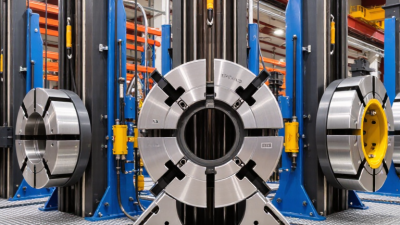
A bucking unit applies controlled torque to make up or break out threaded oilfield connections. It is used for casing, tubing, drill pipe, and premium connections. Operators place the tubular inside gripping dies, then rotate the connection to a specified torque and turn value. The process helps reduce thread damage, galling, and uneven loading. It is common on drilling rigs, pipe yards, repair workshops, and tubular inspection lines.
Global demand keeps this equipment relevant. The International Energy Agency’s Oil 2024 report forecasts oil demand reaching 105.4 million barrels per day by 2030. OPEC’s World Oil Outlook 2024 projects demand near 116 million barrels per day by 2045. These figures do not measure bucking units directly. They indicate continuing activity across drilling, completion, and maintenance operations. Hydraulic units suit rig floors and high-volume work. Electric units offer cleaner workshop operation and easier digital monitoring. Manual units remain useful for small batches, but operator fatigue can affect repeatability.
Accuracy matters more than appearance. Buyers should check torque range, jaw capacity, connection standards, calibration records, and spare-part access. API Spec 5B provides relevant guidance for casing, tubing, and line-pipe threading practices. A digital torque-turn record is valuable during audits. However, automation is not always the best answer. A sophisticated unit can still perform poorly with worn dies, incorrect alignment, or untrained operators. That part is often overlooked.

A bucking unit is a torque-controlled machine used to make up or break out threaded oilfield tubular connections, including tubing, casing and drill pipe. The chart shows representative nominal outside-diameter bands commonly encountered in oilfield tubular work.
The most versatile option for controlled torque, repeatable connection make-up and break-out, and heavy-duty casing or tubing work.
Designed for wellsite service, field maintenance and locations where equipment must be moved between work areas.
Used in tubular service shops, OCTG handling facilities and inspection lines where high repeatability and larger size coverage are required.
Suitable for selected tubing and light-to-medium-duty applications where compressed-air operation is available.
The diameter bands are representative nominal oilfield tubular sizes, not universal machine limits. Actual selection should be based on required torque, connection design, tubular grade, chuck capacity, power source and applicable API or premium-connection procedures.
Bucking units make up or break out threaded tubular connections with controlled torque. Their main types differ by drive system and installation format.
Hydraulic bucking units use pressurized fluid to power a motor and gear train. The gears multiply torque before the jaws grip the connection. This design suits heavy-duty work and variable torque demands.
Electric units use a motor, gearbox, and electronic controls. They can provide clean, repeatable operation where stable power is available.
Pneumatic units rely on compressed air and remain useful in facilities with existing air systems.
Power matters.
Fixed-frame units stay mounted on a rigid base. They offer strong alignment for repetitive workshop operations.
Portable or skid-mounted units can move between well-servicing areas and remote sites.
During a make-up cycle, the jaws hold one pipe section while the rotary head turns the other. Torque sensors record resistance as the threads engage. Some systems also track rotation angle, helping technicians identify cross-threading or incomplete engagement.
Break-out works in reverse, but seized connections may exceed normal settings.
Buyers should compare jaw capacity, torque range, control accuracy, calibration records, and safety interlocks. Do not judge by torque alone. A larger range can reduce control at smaller connections.
Real installations are rarely perfect. Uneven floors, worn dies, and temperature changes can affect results. Clear maintenance access and trained operators often matter as much as the drive type.
Choosing a bucking unit in 2026 requires more than reading the largest capacity number. In field evaluations, I compare rated capacity with the heaviest connection the crew actually handles. A 50-ton rating may be unnecessary for routine tubular work, while a smaller unit can struggle near its limit. Ask for continuous and peak capacity, not one headline figure. Leave a practical margin for alignment errors, worn dies, and cold-weather oil thickening. These details matter during a night shift.
Torque deserves the same careful reading. Check working torque, breakout torque, speed range, and repeatability. A high peak value looks impressive, but controlled low-speed torque often protects threads better. Request test data at several sizes. Ask how calibration is verified. I prefer records from witnessed tests, although paperwork can still hide poor setup. Operators should also confirm jaw range, tooling changes, and access around the pipe. Fast changeovers save labor, but only when locking mechanisms remain simple.
Size affects purchase cost, shipping, installation, and daily safety. Measure the work area, door height, lifting points, and available power before selecting a frame. Compact equipment is easier to move, yet compact does not always mean light. Review gross weight, center of gravity, noise, guarding, and service clearances. Global buyers should confirm electrical frequency, documentation, spare-part support, and local inspection requirements. I would not approve a unit from a brochure alone. A video call with the operator often reveals awkward controls or blind working zones. That small reality check can prevent an expensive mismatch.
| Bucking Unit Type | Typical Application | Pipe or Casing OD Range | Maximum Make-Up Torque | Maximum Break-Out Torque | Typical Load Capacity | Approximate Footprint | Approximate Operating Weight | Typical Power Requirement | Best Choice For |
|---|---|---|---|---|---|---|---|---|---|
| Compact Workshop Bucking Unit | Routine inspection, repair, and connection testing for small- to medium-diameter tubulars | 2⅜–7⅝ in (60–194 mm) |
10,000–50,000 lbf·ft (13.6–67.8 kN·m) |
15,000–60,000 lbf·ft (20.3–81.4 kN·m) |
Up to 100,000 lbf (445 kN) |
Approx. 2.5 × 1.8 m | 2,000–5,000 kg | 15–40 kW hydraulic power unit | Small workshops, laboratories, and low-to-medium production volumes |
| Standard Hydraulic Bucking Unit | General-purpose make-up and break-out of oilfield tubing, casing, and premium connections | 2⅜–13⅜ in (60–340 mm) |
20,000–100,000 lbf·ft (27.1–135.6 kN·m) |
30,000–125,000 lbf·ft (40.7–169.5 kN·m) |
Up to 250,000 lbf (1,112 kN) |
Approx. 3.5 × 2.4 m | 5,000–10,000 kg | 30–75 kW hydraulic power unit | Most international service centers and mixed-diameter tubular programs |
| Heavy-Duty Casing Bucking Unit | High-torque handling of large casing, tool joints, and high-strength threaded connections | 4½–20 in (114–508 mm) |
50,000–250,000 lbf·ft (67.8–339.0 kN·m) |
75,000–300,000 lbf·ft (101.7–406.7 kN·m) |
Up to 500,000 lbf (2,224 kN) |
Approx. 5.0 × 3.0 m | 10,000–20,000 kg | 60–150 kW hydraulic power unit | Large casing, drilling contractors, OCTG processing, and high-load applications |
| Mobile or Skid-Mounted Bucking Unit | Field service, remote wellsite work, and operations requiring relocation between work areas | 2⅜–13⅜ in (60–340 mm) |
15,000–100,000 lbf·ft (20.3–135.6 kN·m) |
20,000–125,000 lbf·ft (27.1–169.5 kN·m) |
Up to 250,000 lbf (1,112 kN) |
Approx. 4.0 × 2.5 m | 6,000–14,000 kg | 30–90 kW hydraulic power unit | Remote sites, rental fleets, and buyers prioritizing transport flexibility |
| Automated CNC-Controlled Bucking Unit | Repeatable connection testing, digital torque-angle recording, and high-volume production | 2⅜–13⅜ in (60–340 mm) |
20,000–150,000 lbf·ft (27.1–203.4 kN·m) |
30,000–175,000 lbf·ft (40.7–237.3 kN·m) |
Up to 300,000 lbf (1,334 kN) |
Approx. 4.5 × 3.0 m | 8,000–16,000 kg | 45–110 kW hydraulic power unit | High-throughput facilities needing traceability, repeatability, and automated records |
| Multi-Joint or Tandem Bucking System | Simultaneous handling of long tubular assemblies and high-volume pipe preparation | 2⅜–13⅜ in (60–340 mm) |
30,000–150,000 lbf·ft (40.7–203.4 kN·m) |
40,000–175,000 lbf·ft (54.2–237.3 kN·m) |
Up to 350,000 lbf (1,557 kN) |
Approx. 7.0 × 3.5 m | 14,000–28,000 kg | 75–180 kW hydraulic power unit | Large OCTG yards and production lines where cycle time is the main priority |
Note: The figures are representative engineering ranges for comparing bucking unit categories. Actual performance depends on connection design, pipe grade, thread condition, clamping arrangement, hydraulic pressure, operating temperature, and applicable API or ISO requirements. Always verify the manufacturer’s certified torque chart and load data before selection.
For global buyers, a bucking unit should be judged by control quality, not only cutting speed. Hydraulic, electric, and hybrid types can all process logs, but their safety needs differ. A guarded cutting zone, emergency stops, pressure relief, and visible lockout points should be standard. The U.S. Bureau of Labor Statistics reported 5,486 fatal workplace injuries across all industries in 2022. That figure reinforces a simple lesson: operator access must be designed out of the danger zone, not controlled by warnings alone.
Automation can reduce hand exposure and improve repeatability. Automatic diameter sensing, load monitoring, jam detection, and remote diagnostics are practical features for busy mills. The International Federation of Robotics reported 541,302 industrial robots installed worldwide in 2023. Bucking equipment is not a robot by default, but buyers can apply the same principle: automate repetitive decisions while keeping human oversight. Poor sensor calibration remains a weakness. It can create false confidence.
Maintenance planning should begin before purchase. Ask for service intervals, spare-part availability, hydraulic filtration requirements, and documented fault codes. ISO 14224 supports structured reliability data collection for equipment, including failure modes and maintenance events. Record blade wear, motor temperature, vibration, and cycle counts. Keep access panels clear. A small neglected leak can become a production stoppage. Condition-based maintenance may reduce unnecessary part replacement, but it needs trained technicians and clean data. Cheap monitoring is not always useful monitoring.
Choosing the right bucking unit starts with the leaf, not the catalogue. Confirm leaf width, stem toughness, moisture, and hourly load before comparing machines. In practical trials, uneven moisture often causes more stoppages than motor capacity. A unit rated for 2,000 kilograms per hour may perform poorly with wet, tightly packed material.
The WHO Global Report on Trends in Tobacco Use 2000–2030, published in 2024, estimates 1.25 billion tobacco users in 2022. This indicates sustained global processing demand, but demand alone should not determine equipment size.
Check the supplier’s test data, separation rate, product loss, cleaning time, and spare-part access. The FAO’s 2024 Statistical Yearbook also highlights continuing volatility in agricultural production and input costs.
Energy efficiency therefore deserves measured attention. A smaller unit may deliver better lifetime value in a seasonal plant. Bigger is not always better.
Tips: Request a material trial using your own leaf samples. Measure output for one full shift, not ten minutes. Ask for noise, power consumption, dust control, and maintenance records. Verify electrical standards and operator safeguards for the destination country. Leave room for doubt. Reported capacity can change sharply with moisture and feeding skill. A useful comparison sheet should include actual yield, rejected material, cleaning minutes, and unplanned stops. Cite ISO 12100 when reviewing risk controls, and document every assumption before purchase.