10 Best Well Head Equipment Manufacturers Worldwide?
The global energy system still depends on reliable oil and gas production, even as investment shifts toward lower-carbon technologies. The Energy Institute’s Statistical Review of World Energy 2024 recorded global oil consumption above 100 million barrels per day in 2023. The International Energy Agency’s Oil 2024 report expects demand to approach a plateau near 2030. These figures keep production reliability highly relevant.
At the wellsite, Well Head Equipment must control pressure, isolate formations, and support safe flow operations. A damaged valve, poor seal, or unsuitable flange can stop production quickly. Small components matter.
This guide examines 10 Best Well Head Equipment Manufacturers Worldwide? The evaluation considers product range, pressure ratings, material quality, certification practices, engineering support, delivery capability, and field experience. It also considers equipment used in onshore pads, offshore platforms, and high-temperature applications. The International Association of Oil & Gas Producers highlights standardized well integrity practices as essential for controlling operational risk. That principle shapes this comparison.
Company size alone does not prove technical excellence. A major supplier may still perform poorly on local service or customization. Conversely, a smaller manufacturer may provide excellent engineering for a specific basin. This is where the comparison becomes less certain. Public information varies between manufacturers, and some performance data remains confidential. Readers should verify API compliance, pressure-test records, warranty terms, and regional approvals before purchasing.
The selected manufacturers represent established capabilities, but no ranking is permanently correct. Field conditions change. So do regulations, materials, and completion designs. The most suitable supplier is the one that matches the well’s pressure, temperature, corrosion, and maintenance requirements.
Wellhead Equipment Explained: API 6A and 2,000–20,000-psi Pressure Ratings
Wellhead Equipment Explained: API 6A and 2,000–20,000-psi Pressure Ratings
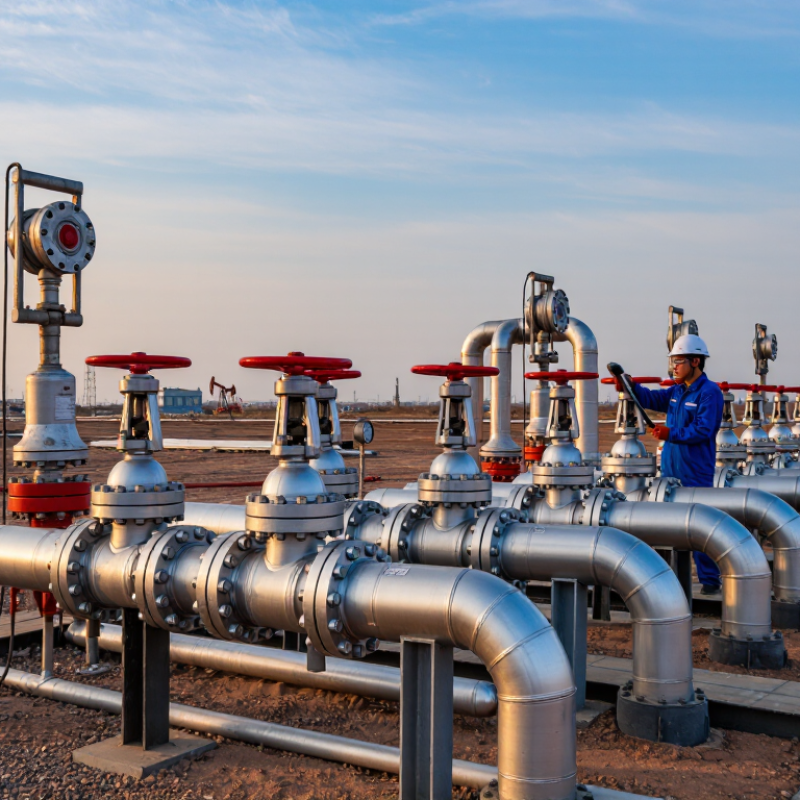
Wellhead equipment controls pressure and supports casing at the surface of an oil or gas well. API Specification 6A defines key requirements for wellheads, casing heads, tubing heads, and Christmas trees. It addresses design, materials, manufacturing, testing, marking, and documentation. In practical purchasing work, the API monogram is only one checkpoint. The complete data sheet matters more.
Pressure ratings commonly range from 2,000 to 20,000 psi. These values describe working pressure, not unlimited operating permission. A 10,000-psi assembly still needs suitable temperature limits, pressure testing, and correct installation. Test pressure may exceed the rated working pressure, but engineers must follow the approved procedure. A pressure label alone can mislead.
API 6A selection also involves product specification levels, performance requirements, material classes, and temperature classes. Sour-service wells require careful material control because hydrogen sulfide can damage unsuitable components. Inspectors should verify certificates, dimensional records, sealing surfaces, and valve function. Small scratches on a metal seal can become serious during testing. I have seen projects focus heavily on pressure rating while overlooking flange compatibility and access for maintenance. That mistake is easy to repeat. Field conditions are rarely as clean as the drawing. Reliable manufacturers should provide traceable records and practical technical support, not merely impressive catalog figures.
Global Market Context: 2024 Oil Demand Reached 103.8 Million Barrels per Day
Global oil demand reached 103.8 million barrels per day in 2024, increasing pressure on well head equipment manufacturers worldwide. That volume requires dependable control systems from the reservoir to the gathering line. Well heads must manage pressure, temperature, corrosion, and changing production conditions. Small design failures can cause costly shutdowns. Safety comes first.
The ten best manufacturers are not judged by factory size alone. Their equipment should meet recognized engineering standards and support documented testing. Experienced buyers examine valve durability, sealing performance, material traceability, and after-sales service. Field engineers also value clear maintenance instructions and accessible replacement parts. Digital pressure monitoring is becoming more useful, especially on remote sites. However, technology alone does not guarantee reliability. Local climate matters. Desert heat, offshore salt, and freezing conditions demand different material choices. A strong manufacturer adapts its equipment to these realities.
Independent inspection records can strengthen supplier evaluation. So can verified operating references from comparable wells. Yet no ranking is perfect. A supplier with excellent equipment may still struggle with delivery or technical communication. I have seen specifications look impressive until maintenance teams tested them under daily pressure. That gap deserves attention. Buyers should compare lifecycle cost, not only purchase price. The best choice balances safety, serviceability, compliance, and proven field performance as global demand continues to challenge energy infrastructure.
10 Best Well Head Equipment Manufacturers Worldwide?
Global Market Context: World Oil Demand, 2019–2024
Global oil demand recovered strongly after the 2020 disruption and reached approximately
103.8 million barrels per day in 2024. Rising consumption supports continued
investment in upstream infrastructure, including well head equipment, pressure-control systems,
valves, and production-monitoring solutions.
Data: International Energy Agency oil-market demand series; values shown in million barrels per day.
Ranking Criteria: API 6A, ISO 9001, Product Range, and Global Service Data
A credible ranking of wellhead equipment manufacturers should begin with API 6A compliance. This standard tests pressure-containing equipment under demanding oilfield conditions. Auditors should verify certificates, edition requirements, material classes, temperature ratings, and validation records. Evidence matters. A certificate alone is not enough. Factory inspections, traceable documentation, and field performance reports provide stronger proof of technical competence.
ISO 9001 adds discipline to design, purchasing, manufacturing, and corrective actions. During supplier evaluations, reviewers should examine calibration logs, welding controls, inspection plans, and nonconformance records. Details reveal capability. Product range also deserves careful weighting. A capable manufacturer may supply casing heads, tubing heads, wellhead connectors, flanges, valves, and Christmas tree assemblies. Compatibility reduces installation delays and simplifies spare-parts planning. However, broad catalogs can hide limited production depth. This is where rankings become imperfect.
Global service data should include response times, regional technicians, spare-parts locations, commissioning records, and documented maintenance outcomes. A supplier with support near major basins may outperform a larger supplier with slower technical assistance. Measured data is preferable to marketing claims. Yet service figures are not always published consistently, making direct comparison difficult. Reviewers should record the source, date, project scale, and operating environment behind every number. Practical experience still matters, especially when equipment faces pressure cycling, corrosion, cold starts, or difficult logistics. The best assessment remains transparent, repeatable, and willing to question its own scoring model.
Top 10 Manufacturers: Technologies, Regions, Applications, and Market Strengths
The ten strongest wellhead equipment manufacturers are best judged by capability, not publicity. Fortune Business Insights valued the global wellhead equipment market at about USD 6.56 billion in 2023 and projects continued growth through 2032. That expansion favors suppliers offering forged housings, high-pressure seals, and digital pressure monitoring. Certification to API 6A and ISO 10423 remains essential for dependable field use.
Technology separates the leaders.
Onshore shale projects require compact wellheads, rapid installation, and frequent pressure cycling. Offshore developments demand corrosion-resistant materials, subsea compatibility, and stronger remote-monitoring systems. High-pressure, high-temperature wells need tested sealing performance, not attractive brochures. The Middle East rewards heat resistance and long service intervals. North America values speed and modular designs, while Asia-Pacific shows growing demand for localized manufacturing and service support. Rystad Energy’s upstream investment outlook also indicates sustained spending on oil and gas infrastructure, although project timing remains uneven.
A useful top-ten assessment should examine delivery records, testing depth, regional workshops, and lifecycle support.
Market strength is not only production volume. It includes spare-part availability near the rig. It includes engineers who understand field failures. No ranking is permanent. That is a weakness. A manufacturer may lead offshore systems yet perform poorly in mature onshore fields. Independent inspection, documented pressure tests, and operator references provide more reliable evidence than market claims. LNG expansion, brownfield redevelopment, and stricter emissions monitoring may further reshape supplier positions over the next decade.
Manufacturer Comparison: Pressure Ratings, Lifecycle Support, Lead Times, and Costs
10 Best Well Head Equipment Manufacturers Worldwide?
Comparing well head equipment manufacturers requires more than checking catalog prices. Pressure ratings should match the operating envelope, not merely the maximum advertised figure. Confirm working pressure, test pressure, temperature limits, and material compatibility. A well head exposed to sour service or severe cold needs careful engineering and documented testing. Certifications matter, but traceable inspection records matter more.
Lifecycle support often separates dependable suppliers from short-term sellers. Ask about replacement seals, valve kits, technical training, and emergency field assistance. Lead times should include engineering approval, factory testing, shipping, and customs clearance. A quoted eight-week delivery can become twelve weeks after design changes. Costs also extend beyond purchase price. Consider installation tools, maintenance intervals, spare inventory, inspection fees, and downtime exposure. In my experience, the cheapest quotation can become expensive after one failed seal or delayed shipment. Still, no comparison is perfect; local service quality can be difficult to measure before a project begins.
Tips: Request a pressure-rating matrix and full bill of materials. Compare warranty terms in writing. Ask for recent delivery examples from similar environments. Keep critical spares near the site, especially seals and small valve components. Review corrosion allowances with an independent engineer. Build a realistic contingency into the schedule. Some buyers overlook training, which is a costly mistake. Shorter lead time is valuable only when quality records remain complete.