Leave Your Message

CONTACT

Leave Your Message

How to Choose Oilfield Downhole Tools in 2026?

Selecting Oilfield Downhole Tools in 2026 is not simply a matter of choosing the newest model or lowest quoted price. The right selection starts with the well’s operating envelope: measured depth, hole size, temperature, pressure, dogleg severity, fluid chemistry, and expected vibration. Small mismatches matter. A tool that fits the nominal diameter may still struggle in a tight build section or abrasive formation. Buyers should compare tool limits with the drilling program, not rely on catalog headlines. Ask for documented operating ranges, connection details, inspection history, and clear guidance on maintenance intervals.

Reliability also depends on the full tool string, surface equipment, crew procedures, and available service support. Check how sensors communicate with the rig system, whether connectors match, and how performance changes under heat, shock, and repeated circulation. Request test records and traceable material documentation where relevant. Compare total operating cost, including inspection, replacement parts, downtime exposure, and specialist support—not purchase price alone. A polished brochure is not field evidence. It is easy to overvalue a feature that looks impressive on paper. Review failure reports, operating limits, and lessons from wells with similar geology and trajectories. No single tool suits every well. This guide outlines practical questions for evaluating tool types, suppliers, and specifications in 2026, while keeping safety, compatibility, and verifiable performance at the center. Final decisions should be checked against the approved well plan and qualified engineering review.
How to Choose Oilfield Downhole Tools in 2026?

Define the Well Conditions and Operational Objectives

Defining well conditions is the practical starting point for selecting downhole tools. Record measured depth, hole size, casing or tubing dimensions, deviation, and the narrowest restriction along the planned route. A tool that fits the nominal hole may still hang up at a connection or tight bend. Small details matter.

Document expected temperature, pressure, fluid type, flow rate, and solids. For example, abrasive sand can accelerate wear, while viscous or chemically aggressive fluids may affect tool materials and performance. Include operating limits and available surface equipment in the review. These records are not always complete; treating estimates as confirmed facts can create false confidence.

Then state the operational objective in measurable terms: drill ahead, clean out fill, retrieve an obstruction, or obtain downhole data. Define the required reach, duration, load, and acceptable risk of sticking or lost access. Compare tool dimensions and ratings with the actual well profile, not only the planned one. Ask what happens if conditions differ, such as higher solids or a tighter restriction. Some assumptions will need revision after recent well reports are checked. That is better than choosing around a neat but incomplete plan.
Identify the Downhole Tool Types Required

Choosing downhole tools starts with the job, not a catalog. Map each hole section, formation, and planned completion. For directional intervals, consider measurement-while-drilling and logging-while-drilling tools, steering systems, and stabilizers. Hard or abrasive formations may call for suitable bits, reamers, and vibration-control tools. Keep it practical. A tool that works in one interval may struggle in another.

The U.S. Energy Information Administration’s 2024 Drilling Productivity Report tracks new-well production per rig and legacy-well declines across major producing regions. These data help teams compare basin activity and production trends, but they do not determine a tool string. Match tools to measured depth, hole size, temperature, pressure, fluid properties, and expected dogleg severity. For well intervention, identify whether the task needs a setting tool, packer, fishing assembly, or casing-exit equipment. Check connection compatibility and operating limits before mobilization.

Field experience matters here. Confirm the tool’s pass-through diameter against the narrowest restriction, then review retrieval options and failure contingencies. A simple tally helps. So does a second review. Selection tables can miss real wellbore conditions, especially after losses or unexpected fill. Record those uncertainties, and leave room to revise the assembly when actual measurements differ from the plan.

Compare Material Quality, Performance, and Compatibility

How to Choose Oilfield Downhole Tools in 2026?

Compare Material Quality, Performance, and Compatibility

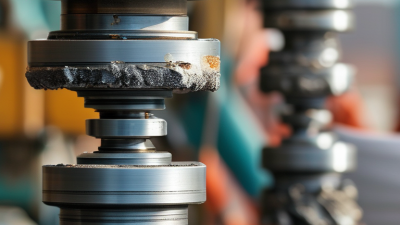
Choosing downhole tools means checking more than tensile strength. Review the material grade, heat treatment, connections, and inspection records. In sour service, verify suitability against the well’s hydrogen sulfide exposure using ISO 15156 guidance. Match corrosion-resistant alloys to the actual fluid chemistry, not a generic “corrosion-proof” claim. A hardness number alone can mislead.

Performance depends on the operating envelope. Compare rated pressure and temperature with expected downhole conditions, then check vibration, torque, flow, and abrasive-solids limits. Ask for test methods and results, including whether testing reflects your well’s actual duty cycle. The IEA’s World Energy Investment 2024 estimated upstream oil and gas investment at about $570 billion for 2024. That scale makes avoidable tool failures a costly risk, though spending figures do not prove any tool will perform better.

Tips: Confirm connection dimensions, tool-string interfaces, and telemetry compatibility before ordering. Request material certificates and service records. Check the fine print.

Field conditions rarely match a perfect test bench. Leave a sensible operating margin, and document assumptions; teams sometimes overlook changing fluid chemistry or temperature. Recheck those assumptions before deployment.

Evaluate Supplier Reliability, Costs, and Support

How to Choose Oilfield Downhole Tools in 2026?
Evaluate Supplier Reliability, Costs, and Support

A low purchase price can become expensive when a tool arrives late or fails during a run. The International Energy Agency’s World Energy Investment 2024 estimated upstream oil and gas investment would rise 7% to about $570 billion that year. That spending signals active demand, not guaranteed delivery. Ask suppliers for documented lead times, inspection records, failure rates, and references from wells with similar pressure, temperature, and fluid conditions. Check how they handle repairs and replacement parts, too. A polished brochure is not evidence.

Compare total cost per run, including freight, inspection, rental days, and downtime exposure. Request a written quote with clear assumptions, then test those assumptions against your well plan. For reliability, review traceable quality records and ask how deviations are investigated. Confirm that technical support covers your operating hours and time zone. A phone number alone is not support. Ask who answers at 2 a.m., and how quickly they can provide a field-ready replacement. Some teams overlook this detail; it can matter more than a small price difference.

Tips: Ask for proof. Compare two recent service cases, including response times and corrective actions. Keep the scorecard simple: reliability, total cost, delivery, and support. Recheck supplier claims after each run. Records can be incomplete, and one successful job proves little. That uncertainty deserves attention.

How to Choose Oilfield Downhole Tools in 2026? - Evaluate Supplier Reliability, Costs, and Support

Evaluation Dimension What to Assess Evidence to Request or Verify Suggested Weight Practical Evaluation Guide
Application and operating-envelope fit Compatibility with the well plan, tool function, hole size, connections, temperature, pressure, flow rate, and expected loads. Tool datasheet, dimensional drawings, operating limits, connection details, and a written confirmation against the planned well conditions. 15% Confirm that every stated limit covers the planned operating conditions, including foreseeable operating margins. Do not rely on a tool name or general product description alone.
Reliability and service history Relevant run history for comparable tool types, applications, and operating conditions; failure and repair patterns; and the supplier’s process for investigating failures. Redacted run records, failure-analysis reports, repair history, inspection records, and customer references for comparable applications. 15% Compare like with like: tool type, well conditions, run duration, and operating practices. Ask how failures are documented and how corrective actions are verified.
Quality management and traceability Documented manufacturing, inspection, calibration, nonconformance, and change-control processes, including traceability of critical components. Quality-system certificate and scope, inspection and test records, material certificates, serial-number traceability, and calibration records where applicable. 10% Check that certificates are current and cover the relevant facility and activities. Verify that the records supplied correspond to the specific tools being offered.
Standards and technical compliance Whether applicable industry standards and project specifications match the tool, connection, materials, and intended service. Applicable standards list, conformity documentation, connection inspection records, and evidence supporting any claimed certification or monogram authorization. 10% Confirm the standard’s scope and current edition for the specific product and service. Standards such as API Spec 7-1, API Spec 7-2, or ISO 15156 may be relevant in particular cases; applicability depends on the tool and service conditions.
Materials and service-environment suitability Material compatibility with temperature, corrosion, erosion, fluids, and any sour-service conditions specified for the well. Material specifications and certificates, coating or hardfacing details, corrosion or sour-service documentation when required, and documented service limits. 10% Match material selection to the actual fluid chemistry and well conditions. For sour environments, verify applicable project requirements and the relevant ISO 15156 provisions rather than assuming every tool is covered in the same way.
Total cost of ownership Purchase or rental charges, mobilization, inspection, maintenance, consumables, repair, standby, replacement, and potential nonproductive-time exposure. Itemized quotation, rental terms, repair and inspection rates, freight and mobilization charges, warranty terms, and assumptions behind any performance claims. 15% Compare equivalent scopes and contract terms. Assess lifecycle and operational costs, not only the initial purchase price; treat estimated savings as assumptions unless supported by comparable records.
Availability and delivery readiness Confirmed inventory or manufacturing capacity, inspection status, delivery location, mobilization plan, and contingency arrangements. Written availability confirmation, tool status and inspection dates, delivery schedule, logistics plan, and backup-equipment options. 10% Request dates tied to the actual job schedule and location. Distinguish ready-to-run equipment from tools that still require inspection, repair, assembly, or transport.
Technical and field support Access to qualified technical personnel, operating guidance, troubleshooting, field coverage, and escalation arrangements during the job. Support plan, personnel qualifications, coverage hours, response and escalation process, operating procedures, and post-job reporting approach. 10% Clarify who is available, where support is provided, and what is included in the quoted scope. Confirm how urgent technical issues will be escalated.
Maintenance, inspection, and repair capability Defined inspection intervals, repair procedures, spare-parts access, turnaround planning, and controls for returning tools to service. Maintenance manuals, inspection checklists, repair records, parts lists, service-facility details, and release-to-service documentation. 5% Check that inspection and repair requirements are documented and that repaired equipment receives appropriate verification before redeployment.
Contract clarity and risk allocation Responsibilities for tool condition, operating limits, damage, insurance, warranty, downtime, data handling, and dispute resolution. Draft contract, rental or service terms, warranty exclusions, insurance requirements, and written definition of each party’s responsibilities. 5% Resolve ambiguous terms before mobilization. Ensure contract assumptions align with the technical scope, operating procedures, and planned job conditions.

Suggested scoring: Score each dimension from 1 (does not meet requirements) to 5 (fully meets requirements with verifiable evidence), then apply the suggested weight. Weights are a customizable evaluation framework, not industry-standard benchmarks. Confirm all technical requirements against the well program, contract, and applicable standards.

Verify Safety, Compliance, and Tool Readiness for 2026

Choosing oilfield downhole tools in 2026 means checking more than the catalog description. Match each tool’s pressure, temperature, fluid, and vibration limits to the well program. Confirm the exact configuration, connection type, and operating envelope before mobilization. Small details matter. A mismatch can delay a run or create avoidable exposure for the crew.

Verify compliance against the contract, operating jurisdiction, and current revisions of applicable standards. Do not rely on an old certificate without checking its scope and validity. Review inspection records, maintenance history, pressure-test documentation, and calibration dates. A checklist can look complete while a connection is worn. Inspect threads, seals, and contact surfaces in good light, and document any damage rather than guessing. Test it under load, using approved procedures and within rated limits.

Readiness includes people and support, not just equipment. Confirm technicians are qualified for the tool and planned operation, and that clear handling and emergency instructions are available at the site. Check compatibility with the string, other downhole components, and surface equipment. Verify critical spares, lifting points, and transport protection before the tool leaves the yard. Field records sometimes miss small changes; pause and reconcile discrepancies with the responsible technical team. That pause may feel inconvenient. It is often the more reliable choice.

How to Choose Oilfield Downhole Tools in 2026?

Verify Safety, Compliance, and Tool Readiness Before the Run

This checklist shows key items to verify against the well program, tool specifications, applicable standards, and operator procedures. A value of 1 means the item requires verification; it does not indicate a pass or measured industry result.