How to Choose the Right Pipe Swaging Machine for Your Needs?
Choosing the right Pipe Swaging Machine is crucial for optimal operation. It directly impacts efficiency and product quality. Consider your specific needs before making a decision.
Every project is unique. Some pipes require precision, while others need speed. What type of materials will you use? This matters. A machine that excels in aluminum may not work as well with stainless steel.
Reflect on your workspace too. A larger machine needs more space but can handle bigger jobs. Finally, think about maintenance. Some machines require frequent upkeep, which can add to costs. Assessing these factors is essential for finding the best Pipe Swaging Machine for your operations.
Understanding Pipe Swaging Machines: Types and Functions
When you look into pipe swaging machines, you encounter various types. Each type has distinct functions. Understanding these differences is crucial for making the right choice.
For example, manual pipe swaging machines are basic. They are ideal for small projects. Users can control the process easily. However, they may not be efficient for larger operations. On the other hand, hydraulic machines are powerful. They handle larger pipes and offer speed. But, they require a bigger initial investment.
Consider your specific needs. Do you require portability? Choose a lighter model. Want precision? A hydraulic machine might suit you. Think about your budget too. It’s easy to overspend on features you might not use. Reflecting on these aspects assures a suitable choice for your operation.
Key Factors to Consider When Selecting a Pipe Swaging Machine
When selecting a pipe swaging machine, consider several key factors. The machine's capacity is critical. Know the pipe sizes you will work with. These can vary significantly. A machine that can handle a range of sizes is often more versatile. Pay attention to the material type as well. Different materials require different machines. Some machines handle aluminum well, but struggle with stainless steel.
Tips: Assess your specific projects. Do you often swage thicker pipes? Choose a machine with higher pressure capabilities. This choice will prevent future work limitations. Additionally, check for ease of use. Complicated machines may slow down your workflow. An intuitive design can save time.
Another essential factor is maintenance. Regular upkeep can extend the machine's life. However, not every model offers easy maintenance access. Consider how often you will need to service it. A machine that requires constant repairs can be frustrating. Furthermore, evaluate the initial investment versus long-term costs. Sometimes, a cheaper machine is not the best choice. Weigh your options carefully.
How to Choose the Right Pipe Swaging Machine for Your Needs?
| Feature |
Description |
Importance |
Price Range |
| Capacity |
Maximum pipe diameter and wall thickness the machine can handle. |
High |
$2000 - $5000 |
| Power Source |
Electric vs. hydraulic operation options. |
Medium |
$1500 - $4000 |
| Portability |
Weight and ease of transportation for onsite jobs. |
Low |
$1000 - $3000 |
| Ease of Use |
User-friendly interface and controls. |
High |
$1200 - $3500 |
| Maintenance |
Frequency and cost of maintenance required. |
Medium |
$500 - $2000 |
| Brand Reputation |
Known reliability and customer service of the manufacturer. |
High |
N/A |
Assessing Your Material and Size Requirements for Swaging
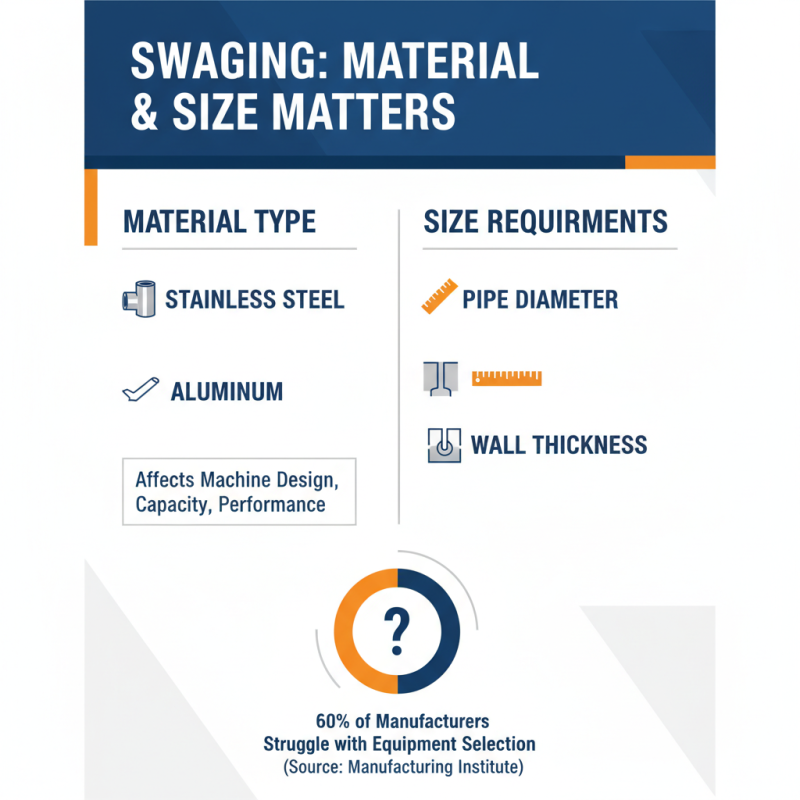
Choosing the right pipe swaging machine requires careful consideration of your material and size requirements. The type of material influences the machine's design, capacity, and performance. For instance, stainless steel and aluminum require different swaging techniques due to their unique properties. According to a recent study by the Manufacturing Institute, nearly 60% of manufacturers face challenges when selecting the right equipment for various materials.
Size is another critical factor. The diameter and thickness of the pipes dictate the type of swaging machine you’ll need. For small pipes, a compact machine may suffice, but larger materials require robust machinery with greater force. In fact, industry standards recommend that your machine should handle up to 20% more than the maximum size of the pipe to ensure efficiency and safety. This can prevent machine strain and extend its lifespan.
It is essential to evaluate the specific sizes and materials frequently used in your operations. Some users overlook the need for versatility. Machines that lack adaptability can lead to increased costs and time inefficiencies. The choice might seem straightforward, but the wrong decision can lead to production delays. Careful assessment of these factors can significantly enhance your workflow and output quality, leading to better operational efficiency.
Evaluating Machine Features: Manual vs. Hydraulic Options
When selecting a pipe swaging machine, understanding the features of manual and hydraulic options is crucial. Manual machines are often simpler to operate. They require less initial investment and can be portable. However, they demand significant physical effort and can be slow. If your production needs are high, this might not be ideal.
On the other hand, hydraulic machines offer efficiency and precision. They can handle larger volumes and tougher materials with ease. The operation is mostly automated, reducing the physical strain on workers. Yet, the upfront cost can be prohibitive for smaller operations. Maintenance can also be more complicated when using hydraulic systems.
It’s essential to weigh the pros and cons of each type based on your specific needs. Think about your budget, workspace, and production goals. What might work well today may not suit future demands. Take the time to evaluate your options carefully before making a decision.
Comparison of Manual vs. Hydraulic Pipe Swaging Machines
Budget Considerations and Long-Term Investment in Swaging Technology
When selecting a pipe swaging machine,
budget cannot be overlooked. Investing in a quality machine is vital for
long-term success. A cheaper machine may save money now but could result in
higher maintenance costs later. Consider the price of replacement parts and
service capabilities. Sometimes, upfront savings lead to future headaches.
Think about the features you truly need. Some machines come with complex
options that might not apply to your projects. Reflect on your production
volume and the types of materials you work with. A simple, robust design may
be more effective than a machine laden with unnecessary technology.
Evaluate training costs as well. A more intricate machine could require specialized training
for your staff, affecting your budget. There’s a fine line between
affordability and functionality. It's essential to balance these factors
carefully. Sometimes, investing a bit more upfront can pay off significantly
over time.